Claude Haiku 5.5 Explained: Vendor Claims, Independent Tests and How to Check a Small AI Model Before You Use It
Claude Haiku 5.5 launched Oct 7, 2026. See what Anthropic claims, what Artificial Analysis and Vals AI measured, and how to test a small model before use.
Small AI models do the quiet, repetitive work behind many apps. They sort support tickets, pull fields out of documents and route requests to bigger models. On October 7, 2026, Anthropic released Claude Haiku 5.5, its newest small model, and it came with bold claims.
This article explains what was released, which numbers come from Anthropic and which come from outside testers, and where the evidence disagrees. It ends with a step-by-step way to test a small model on your own task before you rely on it.
Article index
- What launched and when
- What Anthropic claims
- What independent testers found
- Cost, speed and verbosity
- Security and privacy checks
- A worked example
- Common mistakes
- Recap
- Research Sources
What launched and when
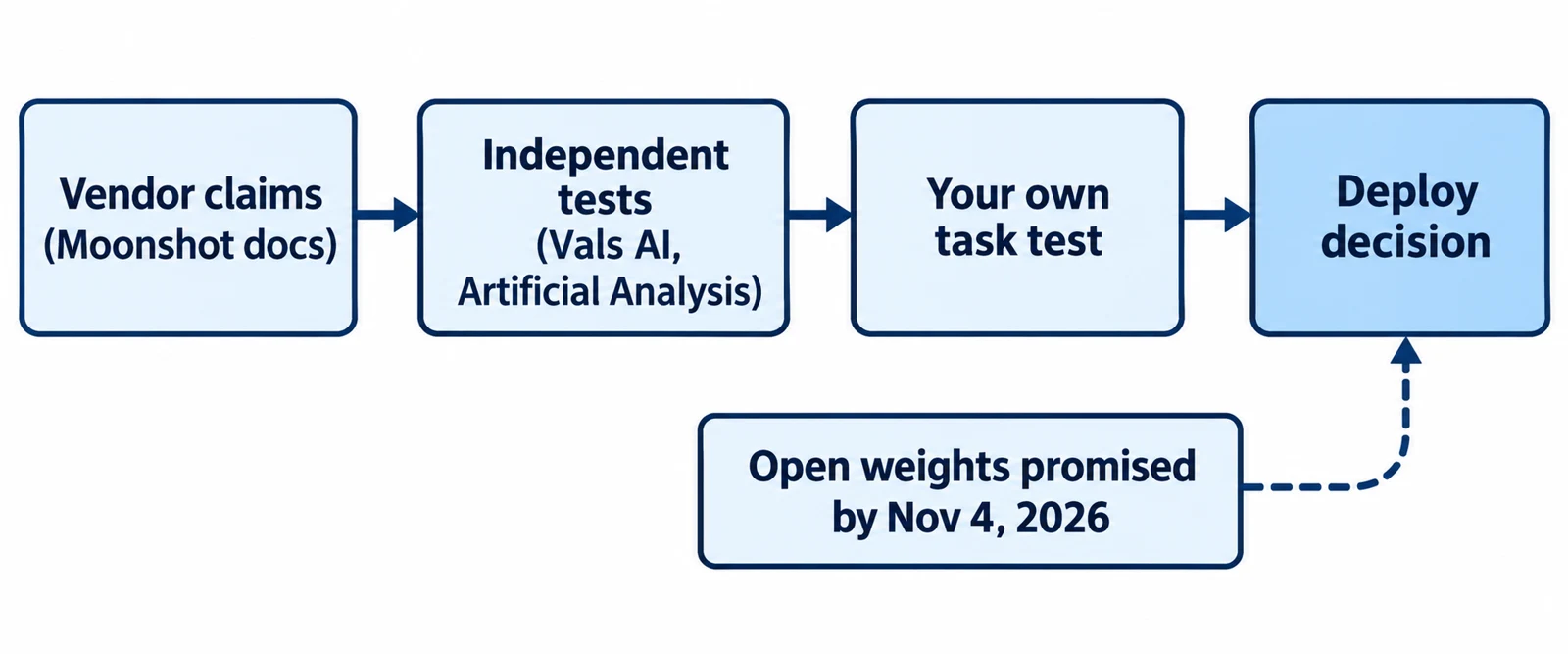
Anthropic's announcement page is dated October 7, 2026. It calls Haiku 5.5 "the cheapest, fastest, and most capable small model we've ever released." That sentence is a vendor claim, not a measurement.
Haiku 5.5 follows two larger models. Anthropic's news index lists Opus 5.5 on September 22 and Sonnet 5.5 on September 28, 2026. The retirement floors in Anthropic's models overview (September 22, September 28 and October 7, 2027) match those launch days.
Dates matter because reports lag launches. DeepLearning.AI's The Batch published its coverage on October 16, 2026. That is the reporting date. The event date is October 7.
Some plain-English terms help here. A token is a chunk of text, roughly a short word or part of one, and providers bill by tokens. The context window is how much text a model can read at once. The effort setting tells the model how much to think before answering.
The docs list a 1M-token context window, up to 128K output tokens, a June 2026 knowledge cutoff, and a default effort of medium. The model ID is claude-haiku-5-5. Anthropic says it runs on its own platform plus Amazon Web Services, Google Cloud and Microsoft Azure. The weights are proprietary, so you cannot download them. The Batch notes that Anthropic has not disclosed the parameter count, architecture or training data.
What Anthropic claims
The announcement pitches Haiku 5.5 at high-volume jobs such as summaries, database queries and classification. It also pitches it as a helper ("subagent") that works beside Opus 5.5 and Sonnet 5.5 on coding tasks. Anthropic calls it the first Haiku-class model with an adjustable effort setting. It also lists computer use and browser use in beta.
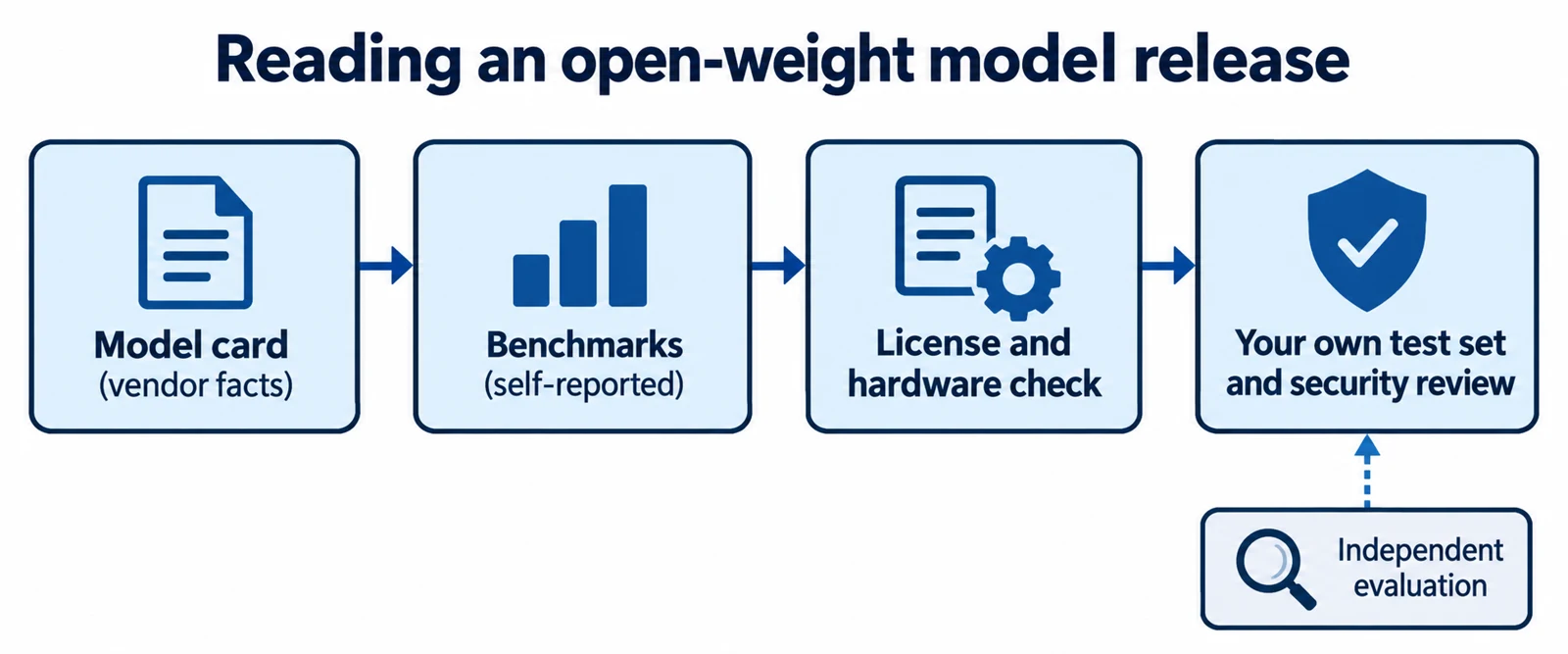
The page includes a benchmark table, and the page itself describes the results as self-reported. A benchmark is a fixed set of test tasks scored the same way for every model. A few examples from Anthropic's table for Haiku 5.5, with Sonnet 5.5 beside it:
- Terminal-Bench 4.0 (command-line agent tasks): 39.2% for Haiku 5.5 and 70.6% for Sonnet 5.5.
- OSWorld 2.1, offline subset (computer use): 72.4% for Haiku 5.5 and 83.9% for Sonnet 5.5.
- Humanity's Last Exam, no tools (hard expert questions): 45.9% for Haiku 5.5 and 56.9% for Sonnet 5.5.
Anthropic's own table shows the larger model ahead in each row. The page says Sonnet 5.5 and Opus 5.5 stay better for complex agentic coding and that Haiku 5.5 suits narrowly scoped tasks. It also warns that Haiku 5.5's updated tokenizer uses slightly more tokens per task than Haiku 4.5.
Read vendor tables closely. The Sonnet 5.5 page lists 80.1% for Sonnet 5.5 on OSWorld 2.1, while the Haiku table shows 83.9% on an "offline subset." The row labels differ, so check footnotes before comparing numbers across pages.
What independent testers found
Independent here means a party with no stake in selling the model. Two outside sources were open to me, and they give a mixed picture. I could not open the Haiku 5.5 system card PDF, because my tool refused its size, so I report nothing from it.
Artificial Analysis lists Haiku 5.5 (Max, the reasoning variant) at 36 on its Intelligence Index v5.0, first of 26 models in that page's comparison set. It reports 235.4 output tokens per second, against a median of 115. The same page calls the model "very verbose" and lists 300M output tokens across the index, against a median of 81M.
The Batch, citing the same tester, gives different numbers: a score of 43, 13th among available models, and 237 tokens per second. I cannot tell why the scores differ. Index versions, comparison sets and effort settings are plausible causes, but that is my guess. Treat rank claims as snapshots and note the date and index version.
Both sources also report very slow first-answer times, 364.23 seconds on the Artificial Analysis page and about 337 seconds in The Batch. That likely includes thinking time at maximum effort, which is my reading and not something either source states. It matters if your app needs fast replies.
Vals AI compared Haiku 5.5 with GLM 5.3 and found Haiku ahead on 10 of 23 shared benchmarks and GLM ahead on 13. On the overall Vals Index the scores were 58.73 and 59.73, with overlapping error ranges. The page warns that overlap is not a significance test, and it shows no date.
The gaps varied a lot by task. Haiku scored 89.00 on ProofBench v1.1 against 49.00. GLM scored 68.44 on IOI against 47.28. Vals measured 36.36 on Terminal-Bench 4.0 for Haiku, a little below Anthropic's own 39.2%, though the two use different setups.
Cost, speed and verbosity
List prices are documented facts. Per million tokens, for prompts up to 100k tokens, the announcement gives Haiku 5.5 at $0.10 input and $0.50 output. Haiku 4.5 is $1.00 and $5.00, and Sonnet 5.5 is $2.00 and $10.00. For prompts over 100k tokens, Haiku 5.5 rises to $0.50 and $2.50.
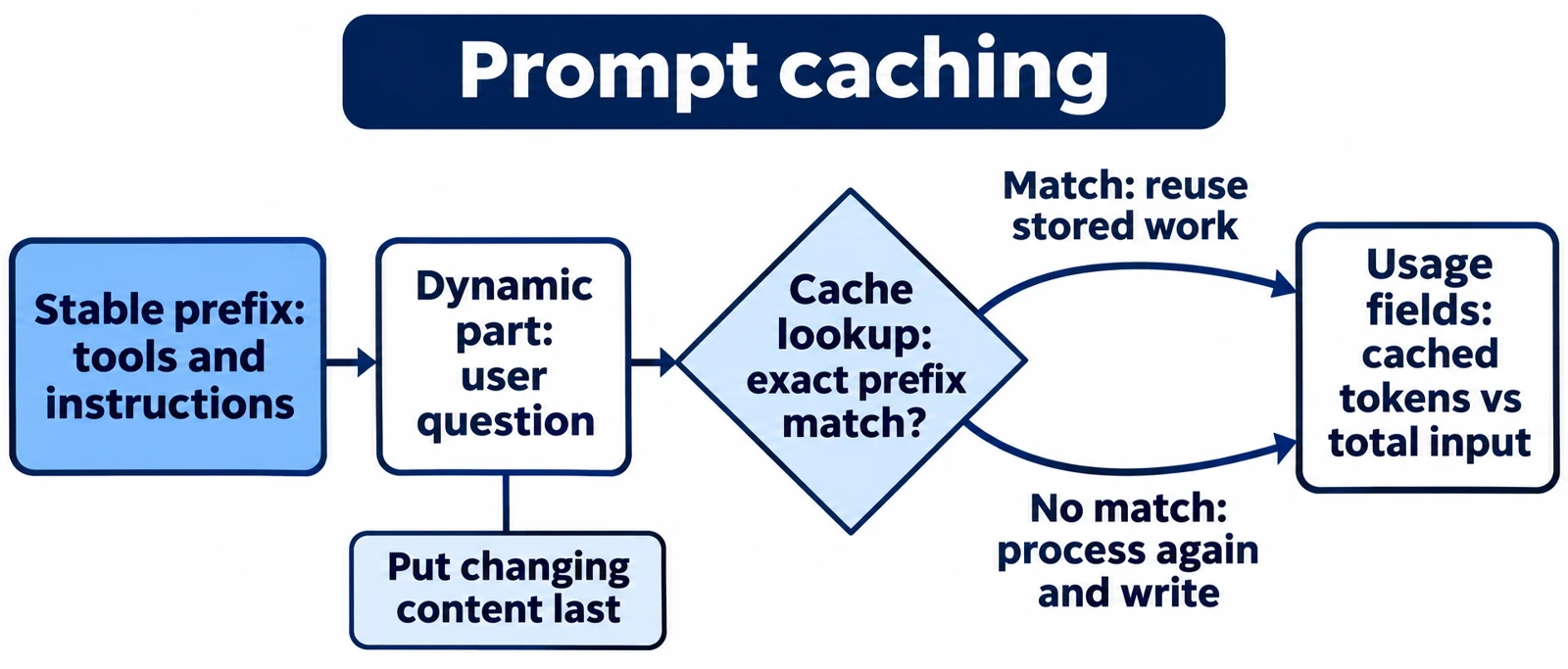
The docs add that Batch API requests are 50% off and that cache reads cost 10% of the base input price for Haiku 5.5. Caching means reusing an unchanged start of a prompt. Anthropic says Haiku 5.5 is about 75% cheaper to run than Haiku 4.5 on average, which is smaller than the raw price gap. Extra tokens from the new tokenizer and from thinking probably explain part of that, but I have not verified the full reason.
Vals reports run costs for both models on its tests. On the Vals Index, Haiku 5.5 cost $3.17 against $8.52 for GLM 5.3, and on ProofBench it cost $0.17 against $2.08. Cost per task depends on how many tokens a model chooses to write, so a cheap rate does not guarantee a cheap bill.
Security and privacy checks
Anthropic describes safeguards that differ by topic. Cybersecurity safeguards are stricter than Haiku 4.5's but looser than Sonnet 5.5's, and penetration testing is still blocked. Biology safeguards match Sonnet 5, Sonnet 5.5 and Opus 5. Organizations that need broader work can apply to Anthropic's Life Sciences and Cyber Verification Programs.
These are vendor statements about product controls, not proof that nothing can go wrong. Anthropic's Sonnet 5.5 page itself says "no set of evaluations reliably catches every failure." That sentence is on the Sonnet page, but the caution applies to any model.
For privacy, send only the text a task needs. The Sonnet 5.5 page mentions zero data retention on the three cloud platforms. The Haiku page I read did not state this for Haiku, so confirm retention terms with your provider before you send personal data.
If you use the beta computer-use or browser-use features, treat every web page as untrusted input. A page can contain hidden text that tries to steer the model. This is my security advice, not an Anthropic finding. Limit what the agent can reach, and require human approval before it sends data or spends money.
A worked example
This is an illustrative scenario, not a test I ran. Imagine a company that must label 100,000 support tickets as billing, bug, account or other. Each ticket is about 500 tokens of input, and the label is about 50 tokens of output. The prices come from the Anthropic announcement and cover prompts under 100k tokens.
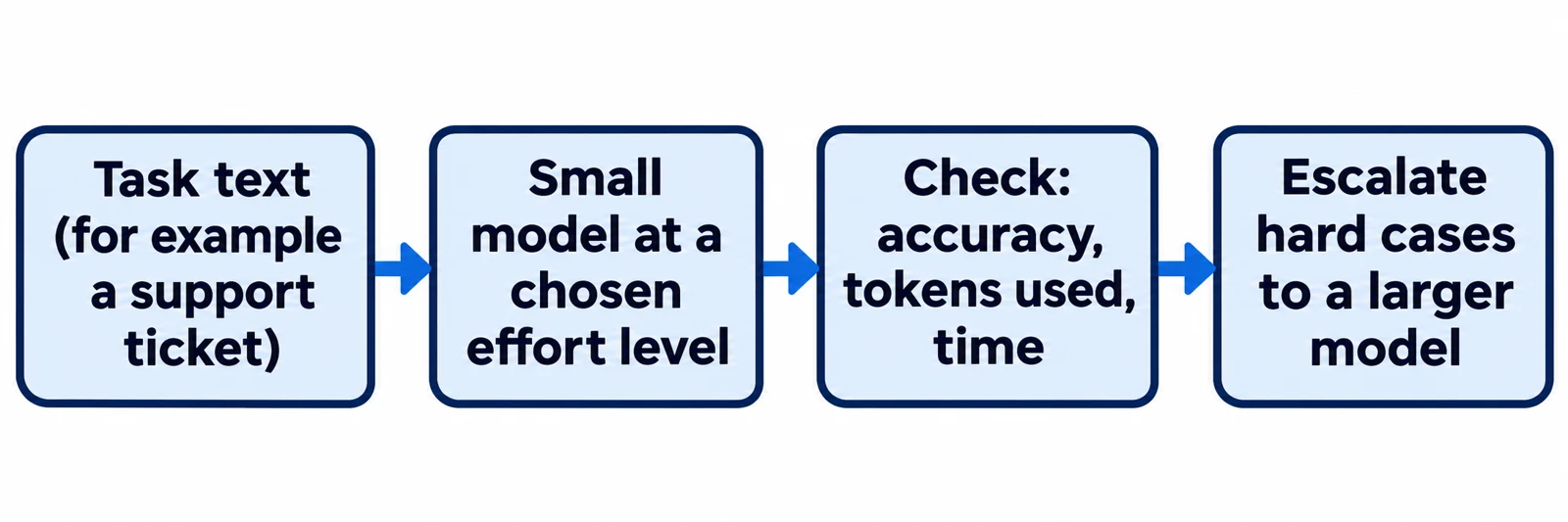
- Write down the task and the pass mark. Input: the four labels and a rule such as "at least 95% match with a human reviewer." What happens: you define success before testing. Result: a number you can check. Why it matters: otherwise a cheap model can look good for the wrong reasons.
- Build a labeled sample. Input: 300 tickets, labeled by a person. What happens: you set them aside as a test set. Result: ground truth for comparison. Why it matters: vendor benchmarks do not cover your tickets.
- Estimate the price from list rates. Input: token counts and rates. What happens: you run the formula below. Result: Haiku 5.5 comes to $7.50, Haiku 4.5 to $75.00 and Sonnet 5.5 to $150.00 (ignoring tokenizer differences). Why it matters: it shows the scale before you spend anything.
- Add thinking tokens. Input: an assumed extra 1,000 output tokens per ticket if the model reasons at higher effort. What happens: output grows to 105 million tokens. Result: Haiku 5.5 rises to $57.50, since output is billed at $0.50 per million. Why it matters: effort can matter more than the headline rate.
- Run the sample at fixed effort settings. Input: the 300 tickets at a low and a higher effort level. What happens: you record accuracy, tokens used and time per ticket. Result: a table for each setting. Why it matters: Artificial Analysis and The Batch both warn that Haiku 5.5 can be verbose and slow to a first answer.
- Add a fallback. Input: tickets the small model marks unsure or labels "other." What happens: those go to a larger model, or to a person. Result: a mix of cheap and careful handling. Why it matters: it limits errors while keeping most of the savings.
cost = (input_tokens / 1,000,000) * input_price
     + (output_tokens / 1,000,000) * output_price

Haiku 5.5, no extra thinking:
  (50,000,000 / 1,000,000) * 0.10 = 5.00
  (5,000,000 / 1,000,000) * 0.50 = 2.50
  total = 7.50 USD
If the sample fails your pass mark, raise the effort one level and rerun it. If it still fails, test the next model up on the same 300 tickets. If the sample passes but the full run drifts, add a monthly re-check against fresh labeled tickets.
Common mistakes
- Trusting vendor tables as proof. Anthropic's numbers are self-reported. Look for outside results such as Artificial Analysis or Vals AI, then test your own task.
- Comparing scores without effort levels. The same model can score differently at different effort settings. Record the setting and the benchmark version with every number.
- Judging by price per token alone. Verbosity and thinking tokens change the bill. Compare cost per correct answer.
- Treating a rank as permanent. The two Artificial Analysis-based figures above disagree. Cite the date and the index version.
- Mixing up launch and report dates. The launch was October 7, 2026. Coverage came later.
- Sending sensitive data before checking retention terms. Confirm them with your cloud provider first.
Recap
- Claude Haiku 5.5 launched on October 7, 2026, and Anthropic's own table puts it behind Sonnet 5.5 on harder agentic tasks.
- Anthropic's benchmark numbers are vendor claims. Outside tests from Artificial Analysis and Vals AI are more useful, but they are snapshots and do not fully agree.
- List prices are low, but verbosity, effort level and tokenizer changes can raise your real cost.
- Both outside sources report slow first-answer times at high effort, so test response time if your app is interactive.
- Test on your own labeled sample, set a pass mark first, and route uncertain cases to a stronger model or a person.
- Limit the data you send, check retention terms, and treat web content seen by an agent as untrusted.
Research Sources
- Anthropic: Introducing Claude Haiku 5.5 (October 7, 2026)
- Anthropic: Introducing Claude Sonnet 5.5 (September 28, 2026)
- Anthropic: News index (launch dates for Opus 5.5, Sonnet 5.5 and Haiku 5.5)
- Anthropic documentation: Models overview
- Artificial Analysis: Claude Haiku 5.5 model page
- DeepLearning.AI, The Batch: Claude fills out its model family (October 16, 2026)
- Vals AI: Claude Haiku 5.5 vs GLM 5.3 comparison (undated page)